
Reconstitute the vial by bringing it to room temperature, slowly adding bacteriostatic water down the inside wall, and gently swirling until the solution is clear. Calculate the water volume from the peptide amount and target concentration, then refrigerate at 2–8°C and follow the lot’s certificate of analysis for the usable window.
Key points
- Reconstituting GLP-3 research peptide vials takes five steps and roughly 15-20 minutes from start to a clear solution.
- Water volume sets final concentration — pick it before you draw a single milliliter, not after.
- Reconstituted solution goes in refrigeration at 2-8°C (36-46°F) and gets used within the window stated on the certificate of analysis.
- Gentle swirling dissolves the powder; shaking risks denaturing the peptide and wasting the vial.
Reconstituting a GLP-3 research peptide vial means turning lyophilized powder back into a usable liquid using bacteriostatic water, and the volume and technique you choose determine whether the vial is usable for lab work at all. Get the ratio wrong and every downstream dilution calculation inherits the error.
- Reconstituting GLP-3 research peptide vials takes five steps and roughly 15-20 minutes from start to a clear solution.
- Water volume sets final concentration — pick it before you draw a single milliliter, not after.
- Reconstituted solution goes in refrigeration at 2-8°C (36-46°F) and gets used within the window stated on the certificate of analysis.
- Gentle swirling dissolves the powder; shaking risks denaturing the peptide and wasting the vial.
- GLP-123 supplies the bacteriostatic water, syringes, and vial adapters used in this process — the technique matters more than the brand of syringe.
Why this matters
A lyophilized vial is just freeze-dried peptide powder plus stabilizing excipients — it does nothing on its own. Reconstitution is the step that turns a stable, shelf-stored compound into a solution a lab can pipette, dilute, and run through an assay. Rush it, use the wrong needle angle, or shake instead of swirl, and you risk foaming the peptide, degrading it, or ending up with a concentration you can't trust for reproducible results.
Most of the errors researchers report trace back to two things: guessing at water volume instead of calculating it, and treating the process the same way across every GLP-family compound when technique actually varies by peptide and vial size. The mixing syringe method used across GLP-1 and related research peptides applies to GLP-3 vials too — same principle, same slow-and-controlled approach.
How do you reconstitute GLP-3 research peptide vials?
The sequence is the same one used across the GLP peptide family sold for laboratory research: bring the vial to room temperature, add diluent slowly, dissolve without agitation, let it settle, then store cold. Here's the breakdown:
- Let the vial reach room temperature. Pulling a cold vial straight from the freezer and injecting water into it stresses the lyophilized cake and slows dissolution. Ten minutes on the bench is enough.
- Draw bacteriostatic water into a syringe. Use a fine-gauge needle — most labs standardize on a needle gauge suited to vial septa access rather than whatever is on hand, since a thick needle can core the rubber stopper and drop debris into the solution.
- Inject the water down the inside wall of the vial, not directly onto the powder. Angling the needle lets the water run down the glass and settle over the cake instead of blasting it, which is what causes foaming.
- Swirl gently — never shake. Rotate the vial in slow circles until the powder fully dissolves, which typically takes 5-10 minutes for a clean, high-purity lyophilized compound. Shaking introduces air and mechanical stress that can degrade the peptide's structure.
- Let the solution rest, then inspect it. A properly reconstituted vial looks clear, with no visible particulate. Cloudiness or visible flecks after ten minutes of swirling means something went wrong upstream — usually water volume or vial handling before you started.
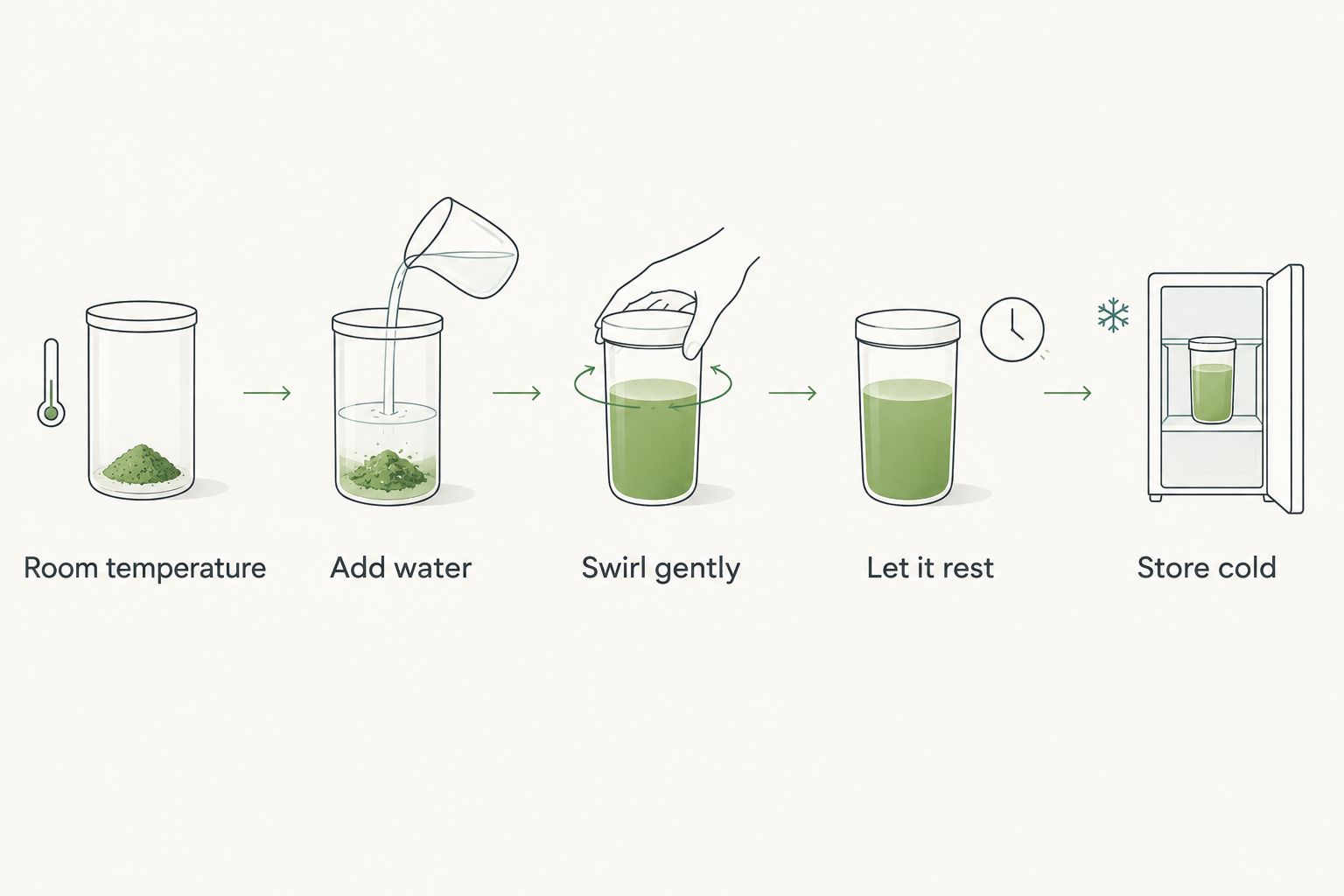
Once the solution is clear, it goes straight into refrigeration. Reconstituted GLP-3 research peptide solution holds up best at 2-8°C (36-46°F), and the usable window is whatever the certificate of analysis for that lot states — not a fixed number that applies to every batch.
Why reconstitution volume varies
There's no single "correct" amount of bacteriostatic water for a GLP-3 vial — the right volume depends on what you're doing with the solution afterward. A handful of factors drive the decision:
- Vial fill amount. More peptide per vial generally calls for more diluent to keep the resulting concentration workable for pipetting.
- Target concentration for the assay. Some protocols need a more concentrated stock solution for serial dilution; others want a ready-to-pipette concentration straight out of the vial.
- Syringe precision available. A 1 mL syringe with fine gradations supports smaller, more precise diluent volumes than a coarse syringe will.
- Downstream dilution steps. If the protocol calls for multiple dilution rounds afterward, starting more concentrated leaves more room for accuracy at each step.
- Storage duration planned. Solutions meant for near-term use can sometimes tolerate a different volume strategy than ones meant to sit refrigerated for weeks.
Getting the bacteriostatic water volume right before reconstitution — not after — saves a vial from being wasted on a guess. Once water is in the vial, you can't remove it to correct a miscalculation.
How much bacteriostatic water do I need per vial?
The amount depends on the total peptide content of the vial and the concentration your protocol calls for — there's no universal figure that applies across every GLP-3 vial size. The math is simple once you know both numbers: total peptide (mg) divided by target concentration (mg/mL) gives you the diluent volume in mL, so back-calculate from the concentration you actually need rather than a round number.
Can I use sterile water instead of bacteriostatic water?
Bacteriostatic water is the standard choice for research peptide reconstitution because it contains a preservative that suppresses bacterial growth across repeated vial access, which matters if the solution sits refrigerated for any length of time. Sterile water lacks that preservative, so a vial reconstituted with it should be treated as single-use rather than stored and re-accessed over days.
How long does reconstituted GLP-3 solution stay stable?
Stability depends on the specific lot and formulation, and the definitive answer is whatever the certificate of analysis for that batch states. As a general rule across lyophilized GLP-family peptides, refrigerated storage at 2-8°C preserves solution quality far longer than room-temperature storage does, which is why the vial goes straight into the fridge after step five.
One detail worth checking before you even open the vial: reading the certificate of analysis tells you the purity and lot-specific handling notes for that exact batch, which matters more for reconstitution planning than any generic guide can. A reconstitution kit built for a specific compound's vial size and fill weight removes most of the guesswork from steps two through four — the kit doesn't change the chemistry, but it does standardize the syringe size and needle gauge so the same technique repeats cleanly across every vial in a batch.
FAQ
How much bacteriostatic water do I need to reconstitute a peptide vial?
The volume depends on total peptide content and your target concentration — divide milligrams of peptide by desired mg/mL to get the diluent volume in mL. There’s no fixed number that works across every vial size, so calculate it before you draw water into the syringe.
Can I use sterile water instead of bacteriostatic water for reconstitution?
Sterile water works for reconstitution but lacks the preservative in bacteriostatic water, so a vial mixed with it should be used promptly rather than stored for later access. Bacteriostatic water is the standard choice when a solution needs to sit refrigerated across multiple uses.
How long does reconstituted GLP-3 research peptide last?
Stability depends on the specific lot, and the certificate of analysis for that batch is the definitive source. Refrigerated storage at 2-8°C generally preserves solution quality far longer than leaving it at room temperature.
Why isn’t my peptide dissolving after reconstitution?
Undissolved powder after ten minutes of gentle swirling usually points to water volume, vial temperature before mixing, or injecting water directly onto the powder instead of down the vial wall. Shaking instead of swirling can also cause clumping rather than clean dissolution.
What syringe size should I use to reconstitute a research peptide vial?
Syringe size should match the diluent volume your protocol calls for — a 1 mL syringe with fine gradations gives more precise control for smaller volumes than a larger syringe does. Matching syringe to volume reduces measurement error at the step that sets your final concentration.
Does shaking a peptide vial damage the peptide?
Yes — shaking introduces air and mechanical agitation that can denature the peptide’s structure, while gentle swirling dissolves the powder without that stress. This is the single most common technique error in peptide reconstitution.
How do I know the concentration after reconstitution?
Concentration equals total peptide content (mg) divided by the volume of diluent you added (mL) — if the vial states 5 mg and you add 2 mL, the resulting solution is 2.5 mg/mL. Record the exact volume you inject so the concentration is traceable for every dilution afterward.
One last thing
The step researchers skip most often isn't the mixing — it's the ten-minute room-temperature wait before any water goes in. Injecting bacteriostatic water into a cold vial straight from the freezer is the fastest way to get a cake that resists dissolving evenly, and it's a five-minute fix that costs nothing. In 2026, with more GLP-family compounds shipping in smaller, more concentrated vials, that ten-minute habit matters more than it did with older, higher-fill-weight formats.
Related guides
Originally published on glp-123.com. This library mirrors the guide for easier reading. Products mentioned are for laboratory research only.
View original


